New Zealand’s Food Delivery Lifestyle Shift: Why We’re Ditching Apps for Local Pickup
New Zealanders are dramatically shifting away from expensive food delivery apps, with pickup orders surging 34% while app-based deliveries plummet. This lifestyle change is reshaping how Kiwis interact with local restaurants and manage their dining budgets in 2026.
The Great Food Delivery Exodus
Something fundamental has shifted in how New Zealanders approach their food delivery lifestyle. Walk past any popular restaurant in Auckland, Wellington, or Christchurch these days, and you’ll see queues of customers waiting for pickup orders rather than the familiar sight of delivery drivers rushing in and out. This isn’t just anecdotal—restaurant owners across the country are reporting a seismic shift in ordering patterns that’s caught even industry veterans off guard.
Food Delivery Lifestyle Shift
The numbers tell the story. Pickup orders have surged by 34% in the past year, while third-party app deliveries have dropped by nearly 20%. This represents more than just a preference change; it’s a complete reimagining of convenience culture. Kiwis who once prized the ultimate convenience of doorstep delivery are now willing to drive across town to collect their butter chicken or fish and chips. The question isn’t whether this trend will continue, but whether the traditional food delivery model can survive this consumer rebellion.

The Economics of Eating Out
Behind this lifestyle shift lies a brutal economic reality that’s finally hit home for New Zealand consumers. A typical $25 meal from a local restaurant can easily cost $40 through a delivery app once you factor in delivery fees, service charges, surge pricing, and the almost-obligatory tip. For a family of four, that’s an extra $60 per order—money that could buy another entire meal if spent wisely.
Restaurant owners are breathing a collective sigh of relief. After years of being squeezed by commission rates that can reach 30% per order, they’re seeing customers return to direct relationships. The New Zealand Commerce Commission noted in their recent market study that delivery app commission structures have created unsustainable pressure on local hospitality businesses, forcing many to raise menu prices across all channels just to break even on app orders.
But here’s where it gets interesting: this isn’t just about saving money. Many Kiwis are discovering they actually prefer the pickup experience. There’s something satisfying about walking into your local Thai place, being greeted by name, and knowing your money is going directly to the business owner rather than subsidizing a tech platform’s expansion plans.
The Lifestyle Convenience Paradox
The irony is delicious. In our quest for ultimate convenience, we created a system so expensive and unreliable that going back to basics—driving to pick up food—now feels like a luxury. According to Stats NZ, the finding showed that New Zealand households spent 23% more on food delivery services in 2024 compared to 2022, yet satisfaction ratings plummeted due to cold food, long wait times, and escalating costs.
This lifestyle change reflects a broader shift in New Zealand consumer behavior. We’re seeing similar patterns in grocery shopping, where click-and-collect services are growing faster than home delivery. Kiwis want efficiency, but they also want control over their experience and their spending. The pandemic taught us to value convenience, but the cost-of-living crisis is teaching us to value our dollars even more.
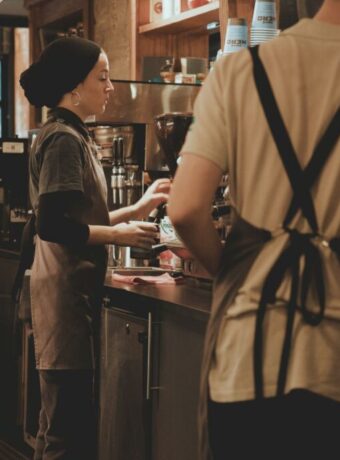
The social aspect can’t be ignored either. Pickup orders often mean brief but meaningful interactions with restaurant staff, a chance to see how your food is prepared, and sometimes even spontaneous conversations with other customers. In our increasingly digital world, these micro-social moments are becoming precious commodities.
Technology Meets Reality
The tech response has been predictably Silicon Valley: more features, more automation, more promises of efficiency. But New Zealand consumers are proving remarkably resistant to technological solutions for problems they’re not sure they had in the first place. Why download another app with push notifications when you can simply call the local pizza place and have a human conversation?
Smart restaurants are adapting by investing in their own ordering systems and loyalty programs. Instead of paying 30% commission to a platform, they’re offering 15% discounts for direct orders and pickup. It’s a win-win that removes the middleman and strengthens the relationship between business and customer. Some establishments are even going old-school retro, bringing back physical loyalty cards and phone-only ordering for regular customers.
The delivery giants aren’t giving up without a fight. They’re slashing commission rates in some markets and offering subscriber-style unlimited delivery plans. But the fundamental economics remain challenging: someone has to pay for the convenience layer, and increasingly, New Zealand consumers are deciding that someone won’t be them.
Regional and Cultural Variations
This lifestyle shift isn’t uniform across New Zealand. Auckland’s traffic-weary residents are more likely to stick with delivery despite the cost, while Wellington’s compact geography makes pickup genuinely convenient. In smaller centers like Tauranga or Hamilton, the personal relationships with local restaurants were always stronger, making the return to direct ordering feel more like coming home than adapting to change.
There’s also a generational element at play. While Gen Z might have grown up with apps, they’re also the generation most conscious of where their money goes. Many young Kiwis are choosing pickup not just for economic reasons, but as a form of conscious consumerism—supporting local businesses directly rather than feeding venture capital-backed platforms.
The rural-urban divide adds another layer. In smaller towns, delivery apps were never cost-effective anyway, so the current trend feels like urban areas finally catching up to what provincial New Zealand never left behind: picking up your own kai.
Future of Food and Lifestyle
Looking ahead, this shift suggests we’re entering a more mature phase of the convenience economy. The initial novelty of having anything delivered instantly is wearing off, replaced by more thoughtful consumption patterns. New Zealanders are becoming more discerning about when convenience is worth the premium and when it’s just expensive laziness.
The winners in this new landscape will be businesses that can blend digital efficiency with human service—think online ordering systems that let you skip queues while still supporting local businesses directly. The losers might be the platforms that assumed convenience was always worth any price and that customer loyalty could be bought rather than earned.
This food delivery lifestyle change might be the canary in the coal mine for other sectors. If Kiwis are willing to reconsider their relationship with food delivery—one of the stickiest digital habits formed during the pandemic—what other convenience assumptions might be next for disruption? Perhaps the real disruption isn’t the next app or platform, but consumers choosing to disrupt their own habits in favor of more intentional living.