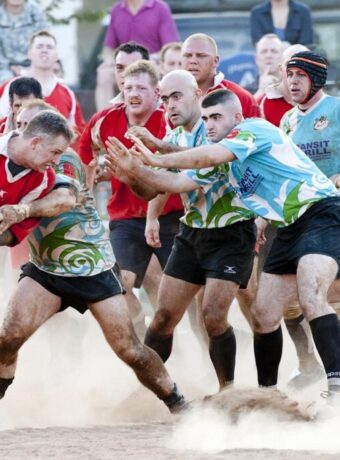
Sport Funding Cuts Hit Grassroots: Why New Zealand’s Olympic Dreams May Rest on Corporate Coffers
Sport New Zealand’s latest funding reallocations are forcing tough choices between grassroots development and elite performance programmes. With traditional government support under pressure, corporate sponsorship is emerging as the critical factor in maintaining New Zealand’s Olympic competitiveness.
The Numbers Don’t Add Up
Sport NZ’s recent budget announcement has sent shockwaves through the sporting community, with several high-performance programmes facing significant funding reductions. The organisation is attempting to balance its books by shifting resources away from what it calls “underperforming” sports, while maintaining investment in medal prospects for LA 2028. It’s a brutal calculus that’s leaving many athletes and coaches questioning their futures.
Funding cuts by sport
The reality is stark: cycling has lost $2.1 million from its annual allocation, sailing faces a $1.8 million reduction, and athletics programmes are down $1.5 million. These aren’t just numbers on a spreadsheet—they represent coaching positions, training camps, and the difference between competing internationally or watching from home. According to Reuters, the funding cuts affect nearly 40% of New Zealand’s Olympic sports programmes, raising serious questions about the country’s ability to maintain its punching-above-its-weight reputation on the world stage.

What’s particularly concerning is the timing. We’re less than two years out from Los Angeles, and athletes who’ve been building towards those Games suddenly find themselves scrambling for alternative funding. The psychological impact alone could derail years of preparation, never mind the practical challenges of maintaining world-class training programmes on shoestring budgets.
Corporate Cavalry to the Rescue?
Enter the corporate sector, which is increasingly being positioned as sport’s white knight. Major New Zealand companies like Spark, ANZ, and Kiwibank have stepped up their sporting partnerships in recent months, recognising the marketing value of associating with Kiwi sporting success. But this shift towards private funding fundamentally changes the landscape—and not necessarily for the better.
Corporate sponsorship comes with strings attached. Companies want return on investment, which typically means backing winners or sports with high media visibility. This creates a natural bias towards established stars and popular sports, potentially leaving emerging athletes and niche disciplines out in the cold. The worry is that we’re moving towards a two-tier system where your access to world-class training depends as much on your marketability as your medal potential.
There’s also the question of sustainability. Corporate partnerships can evaporate overnight due to economic downturns, strategy changes, or poor on-field results. Government funding, whatever its limitations, at least provides some level of predictability. When your Olympic preparation depends on quarterly profit margins rather than long-term sporting strategy, you’re building on shaky foundations.
The Grassroots Dilemma
Perhaps the most troubling aspect of these funding cuts is their potential impact on grassroots participation. Sport NZ insists it’s protecting community sport programmes, but the reality is more complex. When high-performance programmes are gutted, the pathway from local club to international competition becomes increasingly treacherous.
Young athletes need role models and clear progression pathways. When they see their sporting heroes struggling to fund their campaigns or switching to overseas programmes, it sends a powerful message about New Zealand’s commitment to sporting excellence. The flow-on effects could take a generation to fully manifest, but they’ll be devastating for our sporting culture.
The irony is that many of our most successful Olympians came from relatively modest backgrounds and relied heavily on public funding in their developmental years. Lisa Carrington didn’t start as a corporate darling—she was a kid from Tauranga who needed system support to reach her potential. We risk creating a system where only athletes from wealthy families or commercially attractive sports can realistically pursue Olympic dreams.
International Competitiveness Under Threat
New Zealand’s reputation as an Olympic overachiever is built on smart investment and system-wide excellence. We’ve consistently punched above our weight by identifying talent early, providing world-class support, and maintaining programmes across multiple Olympic cycles. These funding cuts threaten to unravel that approach.
Our major competitors aren’t standing still. Australia’s recent investment in their Olympic programmes has been substantial, while countries like Norway and the Netherlands continue to pour resources into sport science and athlete development. If we’re cutting funding while they’re increasing it, the mathematical outcome is predictable—and depressing.
The timing couldn’t be worse, with Paris 2024 fresh in everyone’s memory. New Zealand’s relatively modest medal haul highlighted the increasing competitiveness of international sport. Rather than responding with increased investment and strategic planning, we’re retreating. It feels like a classic case of New Zealand’s tall poppy syndrome applied to sporting ambition—success breeds complacency, and complacency breeds mediocrity.
A Path Forward
The solution isn’t simply throwing more money at the problem, though adequate funding is clearly essential. New Zealand needs a comprehensive sporting strategy that acknowledges the realities of modern Olympic competition while maintaining our commitment to grassroots participation. This means getting smarter about partnerships between public and private sectors, not abandoning public responsibility entirely.
There’s potential for innovative funding models that combine government investment with corporate partnerships and community support. Other small nations have successfully navigated this challenge—Denmark and Ireland both maintain competitive Olympic programmes despite similar population constraints. The key is ensuring that commercial considerations don’t completely override sporting merit and long-term development.
Ultimately, these funding decisions reflect broader questions about New Zealand’s sporting priorities and identity. Are we content to become a nation that occasionally produces individual stars, or do we want to maintain our reputation as a consistent Olympic performer? The choices made in the next 12 months will largely determine which path we take, and the consequences will echo for decades to come.